

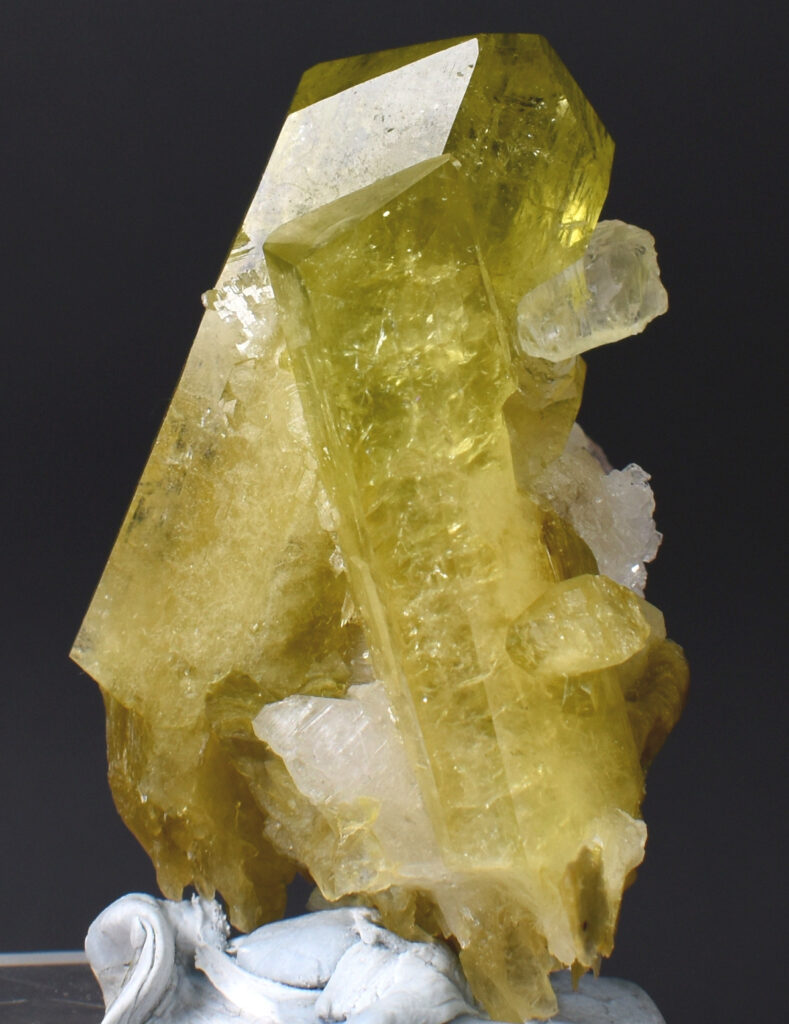
Introduction: A Flash of Green Fire
In the vast and mineral-rich landscapes of Brazil, nature often hides treasures waiting to be discovered. Among these, few sparkle with such a distinctive glow as Brazilianite. Often overshadowed by its more famous emerald and tourmaline cousins, Brazilianite is a true mineral connoisseur’s delight – a vibrant, often transparent green-yellow gem that boasts a captivating brilliance and a rich history tied to its South American origins. But what exactly is this radiant mineral, and why does it hold such a special place in the hearts of collectors? Let’s delve into the world of Brazilianite!
What is Brazilianite? The Science Behind the Sparkle
At its core, Brazilianite is a sodium aluminium phosphate mineral (NaAl3(PO4)2(OH)4). It typically forms in pegmatites, which are igneous rocks known for producing large, well-formed crystals of various minerals.
Key characteristics that define Brazilianite include:
- Colour: Ranging from a vivid, almost neon yellow-green to a more subdued pale green or even colourless. The most prized specimens exhibit that intense, saturated yellow-green hue.
- Lustre: Vitreous (glassy), giving it a beautiful sparkle.
- Transparency: From transparent to translucent, with gem-quality material being fully transparent.
- Crystal System: Monoclinic, meaning its crystals often have distinct, elongated forms with striking terminations.
- Hardness: Relatively soft, ranking 5.5 on the Mohs scale. This makes it a bit delicate for everyday jewellery but perfect for display specimens and careful use in specialized jewellery.
A Relatively Recent Discovery: Its History Unveiled
Unlike ancient gems known for millennia, Brazilianite is a relative newcomer to the mineralogical stage. Its discovery is quite a charming tale of mistaken identity and fortunate re-evaluation:
- Early Sightings (Pre-1940s): Specimens matching Brazilianite’s description were occasionally found in various localities, particularly in Minas Gerais, Brazil. However, they were frequently misidentified, most commonly as chrysoberyl or sometimes even apatite or amblygonite due to superficial similarities.
- The Official Unveiling (1945): The true identity of Brazilianite was only formally recognized and described in 1945. Two distinct discoveries played a role:
- The first definitive discovery of large, well-formed crystals was made in a pegmatite in Conselheiro Pena, Minas Gerais, Brazil.
- Simultaneously, more material was being analyzed from the Palermo Mine in North Groton, New Hampshire, USA, where it was also found in pegmatite formations.
- Naming: The mineral was aptly named “Brazilianite” in honor of Brazil, its primary and most significant source.
- Post-Discovery Boom: Once properly identified, mineralogists and collectors began to recognize its unique beauty, and interest in this vibrant green gem rapidly grew.
Rarity & Occurrence: Where Does it Call Home?
While Brazilianite isn’t among the absolute rarest minerals on Earth, fine, gem-quality crystals are certainly considered uncommon and highly sought after.
- Primary Source: By far the most important and prolific source of fine Brazilianite is the Minas Gerais state in Brazil, particularly localities around Conselheiro Pena and the Cavalhada Mine. These mines have yielded crystals ranging from small fragments to spectacular, museum-grade specimens weighing several pounds.
- Other Occurrences: While Brazil remains dominant, smaller, less significant occurrences have been noted in other pegmatite environments, including the already mentioned Palermo Mine in New Hampshire, USA, as well as in Rwanda. However, these other localities rarely produce specimens of the size, clarity, or colour intensity found in Brazil.
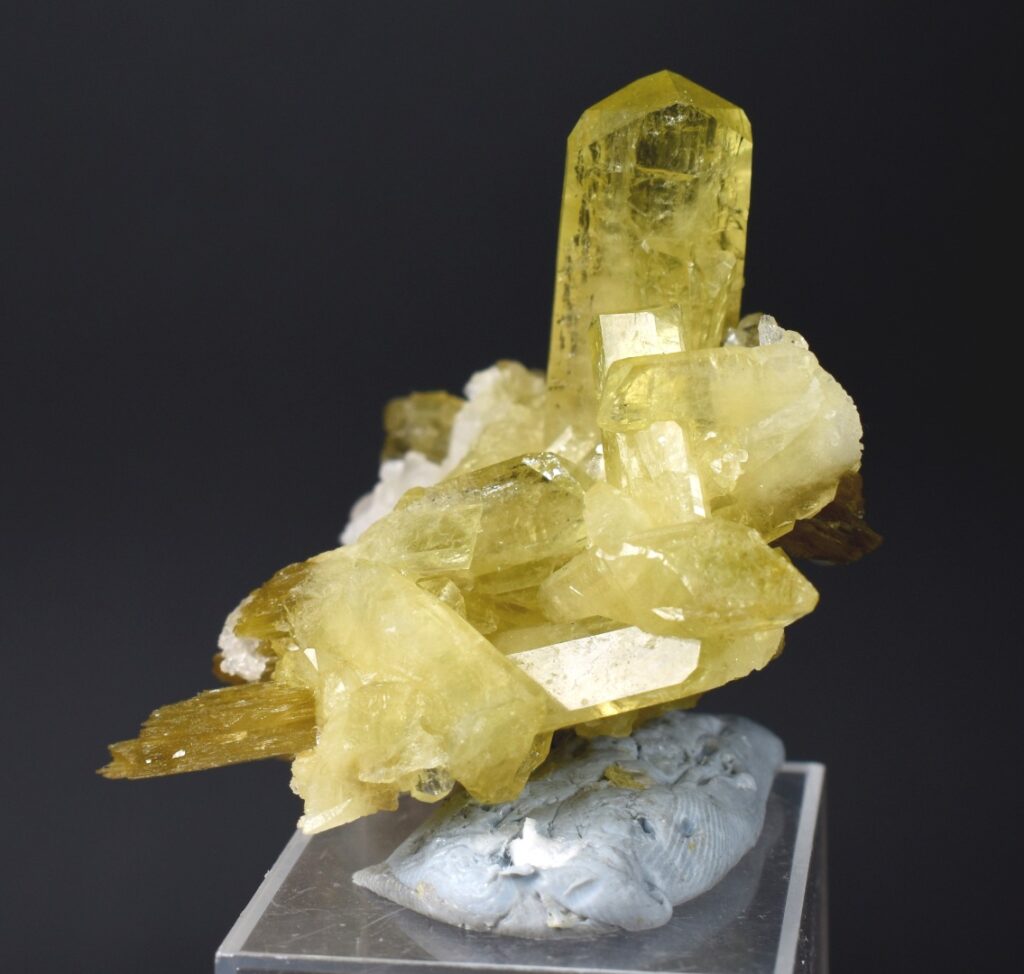
- Crystal Growth: Brazilianite often forms in vugs (cavities) within pegmatites, allowing its crystals to develop freely into beautifully terminated, often tabular or prismatic forms.
Fun Facts & Fascinating Titbits about Brazilianite!
- “Mistaken Identity” Mineral: As mentioned, for decades, Brazilianite was confused with other minerals. It took scientific analysis to give it its proper place!
- Delicate Beauty: With a Mohs hardness of 5.5, Brazilianite is softer than quartz. This means it’s usually faceted into gemstones for collectors rather than engagement rings.
- A Collector’s Gem: Due to its beautiful colour, high clarity, and often impressive crystal forms, Brazilianite is primarily a collector’s mineral. Large, well-formed crystals on matrix are highly prized.
- Pleochroism: Some Brazilianite specimens exhibit pleochroism, meaning they can appear to be different colours when viewed from different angles. This adds another layer of intrigue to its visual appeal.
- Not Just Green: While the vibrant yellow-green is most famous, Brazilianite can also be colourless, pale yellow, or light green.
- “Phosphate Powerhouse”: Brazilianite belongs to the phosphate mineral class, a group that includes many beautiful and collectible minerals like Apatite and Turquoise.
- Metaphysical Associations: In the world of crystal healing, Brazilianite is believed to be a stone of abundance, focus, and clarity. It’s thought to help with decision-making, boost confidence, and connect one with their inner strength. It’s often associated with the Solar Plexus chakra.
Conclusion: A Gem Worth Discovering
Brazilianite may not have the ancient mystique of diamonds or the widespread recognition of emeralds, but it holds a unique charm that captivates anyone who encounters its brilliant, verdant glow. Its relatively recent discovery, specific geological origins in the heart of Brazil, and stunning visual appeal make it a truly special mineral.
Whether you’re a seasoned collector seeking a unique specimen, a gem enthusiast appreciating its vibrant facets, or simply someone who marvels at the Earth’s natural artistry, Brazilianite offers a fascinating story and an undeniable radiance. Keep an eye out for this bright green gem – it’s a piece of South American sunshine solidified in crystal form!
Our website features a selection of truly stunning Brazilianite specimens. View this exceptional collection by following the link below
Brazilianite Specimens – CalderCrystals
Keep Exploring the World of Minerals!
We hope you’ve enjoyed diving into the unique properties of this mineral. Learning about crystals and minerals is a fascinating journey, and we’re committed to empowering you with knowledge.
Connect with us on social media to stay updated:
- Instagram: @CalderCrystals
- Facebook: @CalderCrystals
- TikTok: @calder_crystals
- YouTube: @caldercrystals5204
Looking to stock or collect our beautiful crystals and minerals? We also offer a dedicated wholesale service! Visit our trade website – trade.caldercrystals.com to explore our extensive collection at competitive prices!
We’re excited to continue sharing the amazing world of minerals with you!